The axis of the marine propeller is divided into three main components-
A shaft of thrust,
Middle shaft
Tail axis
The thrust shaft is the main shaft of the engine. It directly receives the rotation of the crankshaft and rotates at a maximum speed in a high -speed engine.
For high -speed engines, the thrust shaft is further connected to other components located in the rear.
The next part is the middle shaft. There is no specific limit for the number of intermediate shafts that ships can have. However, if the axis exceeds 2, maintenance and maintenance will be difficult. This is because the hanging chain force on the entire propeller shaft is very large. Due to the weight of the parts, this force often deforms and damage parts.
When a large vibration impact on the shaft is combined, the propeller shaft may be permanently damaged. Therefore, it is best to use a small number of middle shafts.
The last part is the tail axis. It is directly connected to the propeller, mainly located in the axis tube. The tail shaft is connected to the middle shaft by manipulating the gearbox of torque transmission. The design of the tail shaft can withstand the force that may act on the stern.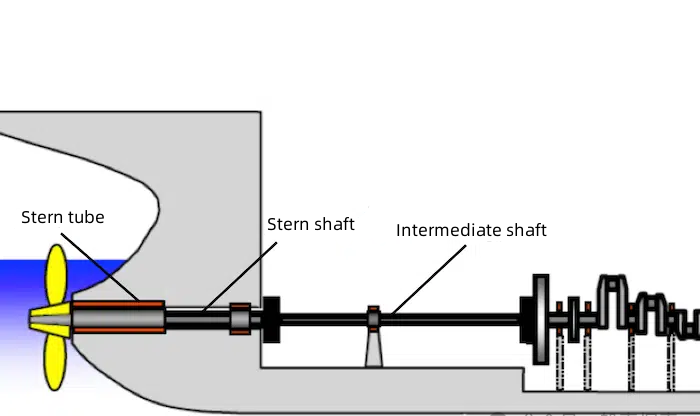
The next part is a coupling bearings connecting two neighboring shafts. Coupling is achieved through rigid and non -curved joints. The coupling unit uses a high -strength fastener that can bear a large amount of vibration stress to connect to each other.
Bearing is a component for supporting and bearing bearing loads. They run along the length of the axis to ensure smooth rotation. These bearing is different according to its position.
The last part of the ship's propeller shaft system is the thrust block. These thrust blocks support the propeller shaft with a fixed interval. The role of these thrust blocks is to transmit excess power of the propeller shaft to the hull.When a shaft rotates at a high speed, it will cause a certain degree of vibration. This further leads to vibration and may damage the structure integrity of the ship . Therefore, using a dedicated bearing can disperse the vibration to the hull.
In order to fix these thrust blocks to the hull base, a reinforcement framework needs to be built. There is a main push block at the back of the engine crankshaft, which can disperse most of the impact power into the hull beam and structure.
The above parts of the discussion constitute most parts of the propeller shaft. In addition, there are various small parts, such as sealing agents and bearings, they play different functions.
The design and construction stage is very important because it can ensure structural strength. Since the shaft speeds range from 300 rpm to 1200 rpm, careful control of material fatigue and reduce damage to ship parts.
The structure of the bearing is important because it is affected by the total weight of the propeller shaft.
There are two main types of bearing : the whole shell bearing at the stern and the semi -shell bearing in other positions.
It is an indispensable part to provide a complete bearing for the weight of the full tube. It is located at the stern reason to consider the gravity of the chain, but also to offset any flexion or reverse thrust that it feels at the stern of the stern due to the propeller movement. The bearing is also called the most tunnel bearings because it wraps the shaft like a tunnel.
The other axis only takes weight, so there is no need to set up a tube unit. These bearing must be designed by high -intensity metal, which is not easy to bend or deform under high strain. In addition, during the manufacturing stage, the tolerance level is lower.
The special bearing pad is installed in the groove on the inner surface of the bearing connection, so that it can achieve smooth rotation. In order to lubricate the bearings, oil soaking is needed. Through the rotating surface of the oil coating in the oil spray ring on a regular basis, you can always maintain a thick lubrication coating.
The coolant used to prevent overheating and subsequent damage is water circulating around the bearing. Water is stored in special pipes along the bearing and shaft. The fuel tank stored above the engine platform is a cooler that is equipped with a cycle around machinery and systems.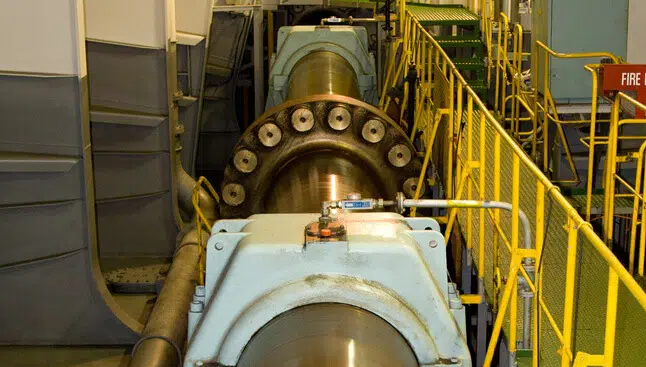
The thrust block is mainly used to buffer and absorb the force of rotating propeller shafts. These forces are re -guided to a special framework that constitutes the base of the engine compartment. The energy in these frames is further dispersed to the hull surface through the hull beams.
The hull beam is the framework of the hull. The thrust block must be installed firmly in place to prevent any form of vibration during the navigation process. In addition, the main force can be a separate unit built alone, or it can be integrated into the ship engine itself.
By integrating the cylinder into the engine, space demand and maintenance costs can be reduced during navigation. However, maintenance may be a problem when mooring, because the engine cylinder shell needs to be opened. The housing that forms the thrust cylinder consists of two parts - the upper half is removable and the lower half supports the shaft.
Put the axis on the lower block, and then fix the upper part of the bolt in place with a special fastener that can absorb impact. In order to lubricate the rotation axis, the oil is regularly applied on the surface of the rotation. This is similar to the bearing method.
Install the oil thrower and the diversion to maintain the continuous oil supply of the oil storage device in the lower half of the thrust block.
The working temperature is controlled by the cooling disk, and the cooling disk circulates the selected type of cooling agent to the entire cylinder body. It also promoted the coolant from the central government to absorb the cooler. To absorb vibration and impact, the bearing pad is mounted on the cylinder.
They have two types: tilt pads or pivot pads, both of which are fixed on a special bracket built -in for thrust blocks. The thrust pads pass the energy to the lower half of the shell, and the structure of the shell can withstand greater impact force.
The thrust ring is also used to absorb the thrust of the propeller shaft. The thrust block contains integrated flanges, which mainly helps fix the bolt to other surfaces.For example, you can use the flange to connect the cylinder to the gearbox or engine. It can also be used to connect the engine thrust shaft to the middle shaft with these flaans. If the thrust cylinder is placed in the engine cylinder body, it is made of the same shell material as the manufacturing engine bottom plate.
In addition, they directly use the lubricants and cooler of the engine component itself. Integrated blocks are similar to ordinary thrust blocks in most other functions. It is worth noting that, in addition to small ships with limited space, most of the thrust blocks of most ships are integrated in the engine.
The shaft itself must be made of solid materials, which has high yield strength, and the possibility of bending is lower. Each axis starting from the thrust shaft must be made into small and easy -to -operate components in order to disassemble when needed.
In addition, sealing and filler boxes are also made of appropriate materials, which can effectively separate internal work machinery from external water. Advanced materials must be used when making propeller shafts, because this is a very sensitive device and needs to be suffered a lot.
The ship's gear box is an overall component connected between the tail shaft and the middle shaft. It is mainly used to manipulate the torque transmitted from the engine crankshaft to the propeller located on the stern. It is most commonly used in large ships that combine high -speed engines during operation.
The working principle of the gearbox is similar to the car gearbox. The clutch sheet and the lining system are used to control the torque. The gearbox uses a solid gear device, which can withstand large vibrations, which is an indispensable part of high -speed engine ships.
Lubrication is a necessary condition to prevent accidents or damage related to friction.
The arrangement of the axis tube refers to the way to support the tube of the tube of the tube of the tail. The stern tube is a hollow horizontal tube that is the main connection between the propeller and the rest of the hull.
The tube is installed on the frame and serves as the plug of the stern. The stern frame is the main structural member supporting the stern overhang located above the propeller and rudder.
The stern tube accommodates the stern shaft of the ship's drive shaft system and has two main uses: to withstand the load and seal the entire ship's stern.
Since the stern tube is the main connection between the ship and the propeller, it must be able to withstand the enormous force exerted by the suspended propeller. In addition, it should provide enough space for the propeller hub to actually move without friction.
In order to withstand the load, Baihe Alloy is a commonly used material that can withstand the required load. The tail tube also provides sufficient lubrication to ensure the smooth operation of the entire ship's advancement system.
In addition to supporting the structural weight and force of the propeller, the axis tube also needs to be able to seal the ship effectively. It prevents water from entering from the stern by using a variety of seals along its length. The stern tube has two main seals located in the stern and bow areas respectively.
This acts as a double protection against any leaks that may occur over the long term. These seals are mainly available in three types: filler box, lip seal and radial surface seal. The filler box is made of various filler materials for blocking the axis tube.
A lip seal is a seal used to prevent lubricant from seeping into water. They also have a dual effect of preventing water from entering the tail axis pipe. Finally, the radial sealing parts extend from the radial radius of any entrance and seal the entire structure with the spring system. They consist of two main components that are connected together to completely seal the rear.
The stern tube plays an important role in ship propulsion because it absorbs and reduces a lot of power generated by the propeller. To completely seal the stern, it may also hinder the rotational ability of the propeller shaft.
Doing so will backfire and create a lot of stress in the hull. Therefore, effective sealing the stern area without affecting performance parameters is a major necessary condition for ship building and engineering.
Marine propeller shafts play an important role in the shipbuilding industry. When designing and building a propeller shaft and a shaft tube, various factors need to be considered. It is very important to properly align the propeller shaft. Since there can be two to four propeller shafts, accurately aligning each propeller shaft can prevent any accidents.
If the axis appears in the middle, even a minute of millimeter deviations, the entire propeller shaft may vibrate quickly. This will lead to huge stress, causing the entire axis permanently and damage. When purchasing marine shafts, it is very important to ensure the highest quality of materials and the correct manufacturing technology.