In any maritime emergency, a lifeboat is more than just equipment—it is a lifesaving system designed to protect every crew member and passenger on board. However, even the most advanced lifeboat becomes ineffective if its launching appliance is not properly maintained and inspected.
According to SOLAS requirements and MSC.402(96), lifeboats and davit launching systems must remain operational, reliable, and ready for immediate deployment at all times.
This article provides a practical overview of lifeboat and davit system components, inspection requirements, and maintenance best practices.
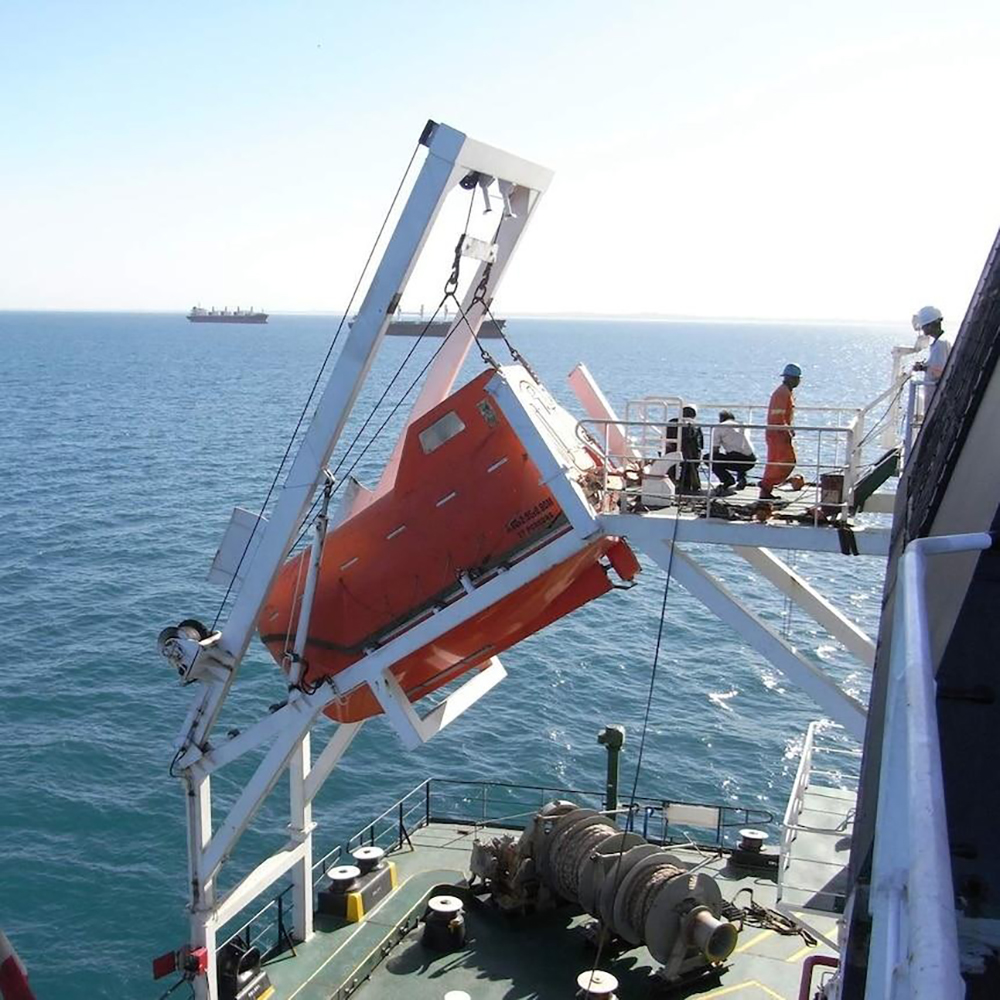
A complete lifeboat launching arrangement consists of four major sections:
The davit is the primary steel structure mounted on the vessel's side. Depending on vessel design, it may be:
Its function is to support, launch, and recover the lifeboat safely.
Falls connect the lifeboat to the winch system and carry the full weight of the boat during launching and recovery operations.
These wire ropes are among the most critical load-bearing components in the entire system.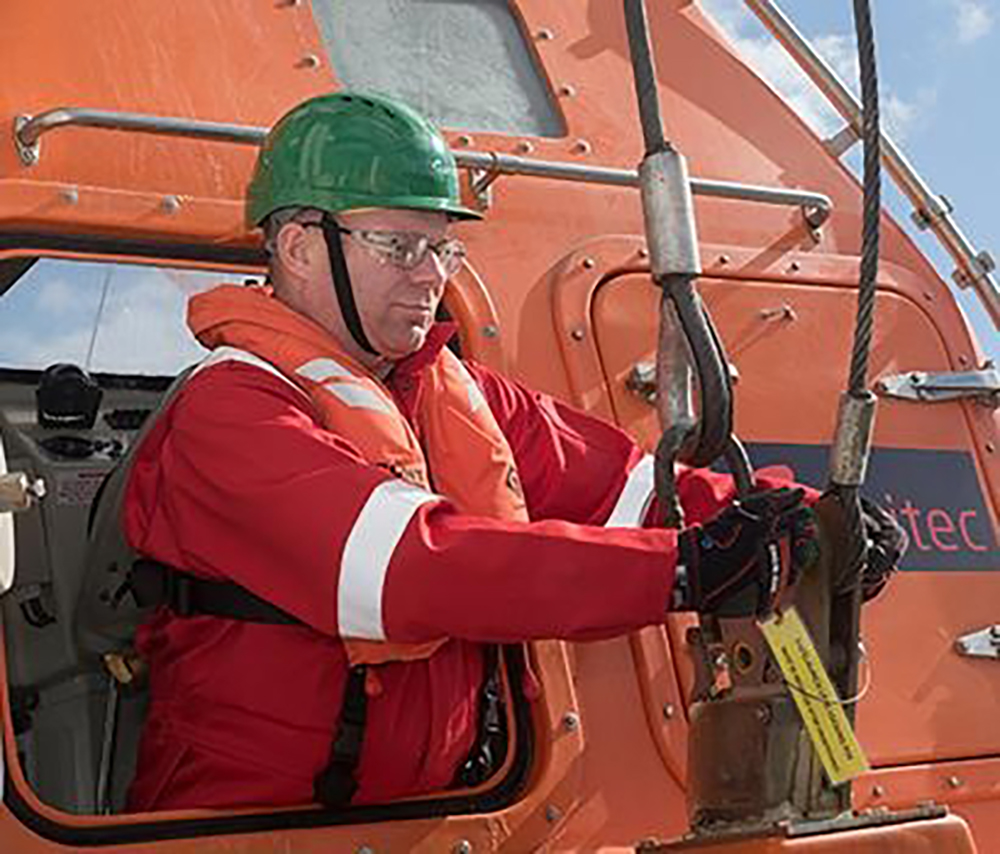
The winch controls the lowering and recovery of the lifeboat and normally includes:
A properly functioning brake system ensures:
These components guide the wire ropes and reduce friction during operation.
Installed to prevent excessive davit movement and protect structural components from impact damage.
The Safe Working Load (SWL) plate clearly identifies the certified load capacity of the davit and launching appliance.
Gripes secure the lifeboat firmly in its stowed position and prevent movement caused by vessel motion.
Additional securing arrangements provide extra safety during rough weather conditions.
Support blocks distribute the weight of the lifeboat evenly while stored.
The release mechanism is considered one of the most safety-critical components of the entire system.
Located at the bow and stern suspension points, these hooks carry the full load of the lifeboat.
Allow controlled release from inside the lifeboat and, in some designs, from outside positions.
The HRU automatically releases the system under water pressure if the vessel sinks, enabling the survival craft to float free.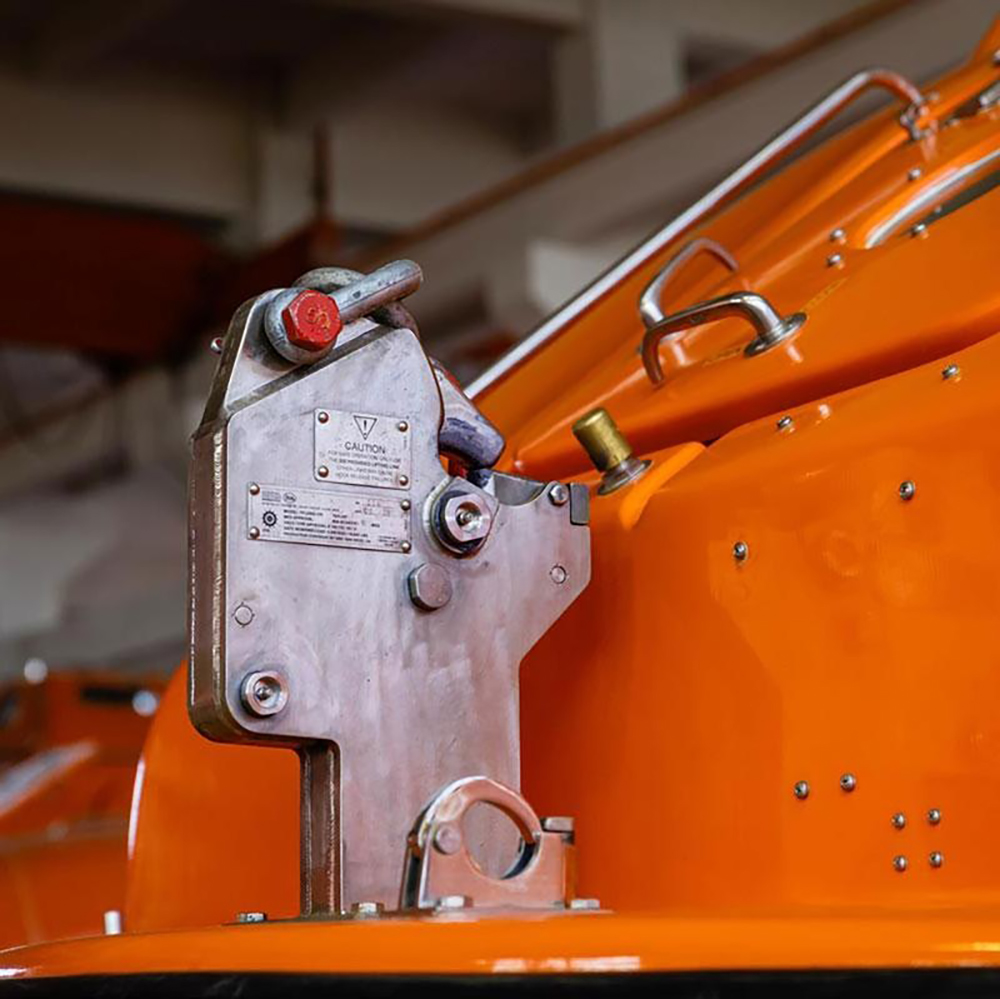
A SOLAS-approved lifeboat normally includes:
Falls should be carefully examined for:
Look for:
Wire ropes must be replaced if excessive broken wires are found according to manufacturer and classification society requirements.
The entire rope should be properly lubricated with approved wire rope grease.
Immediately replace ropes showing:
Check sockets, swaged fittings, and rope terminations for cracks or loosening.
Because release hook failures have caused serious accidents worldwide, special attention must be given to:
Hydrostatic release units should be checked for expiration dates and physical damage.
Verify that:
Inspect:
All components should remain fully operational and free from excessive wear.
The following must remain clearly visible:
Missing or unreadable markings are common deficiencies found during Port State Control inspections.
Operational testing is mandatory under SOLAS and MSC.402(96).
The following tests should be conducted regularly:
The lifeboat should be:
without obstruction or abnormal operation.
The brake system must maintain controlled lowering speed and prevent uncontrolled descent.
The lifeboat should return smoothly to its stowed position and engage all securing arrangements correctly.
At intervals not exceeding five years, authorized service providers must conduct:
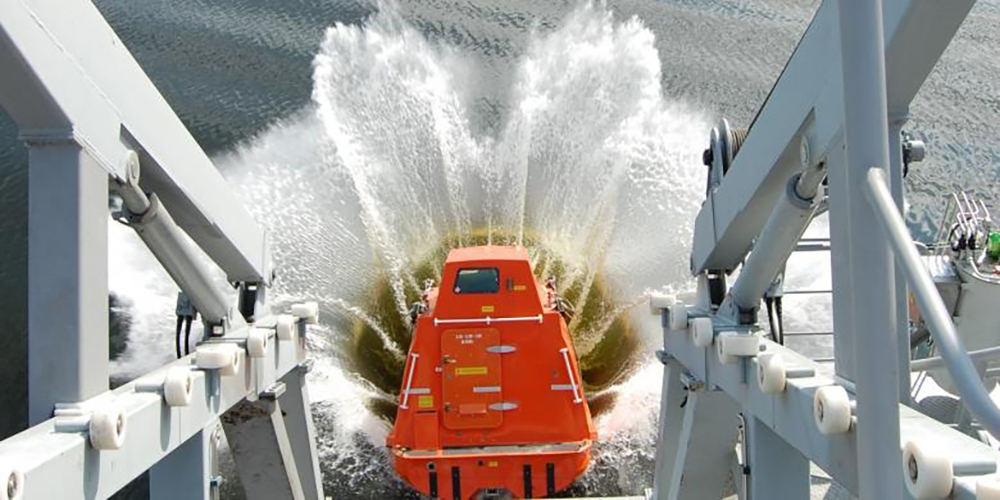
Includes:
Performed by authorized personnel and typically includes:
All maintenance and inspection records must be retained for review by flag administrations, classification societies, and Port State Control officers.
To ensure maximum reliability:
✔ Maintain all moving parts properly lubricated
✔ Replace damaged or worn components immediately
✔ Keep inspection and maintenance records updated
✔ Conduct regular crew drills
✔ Verify emergency launching capability at all times
✔ Ensure all crew members understand the launching procedure